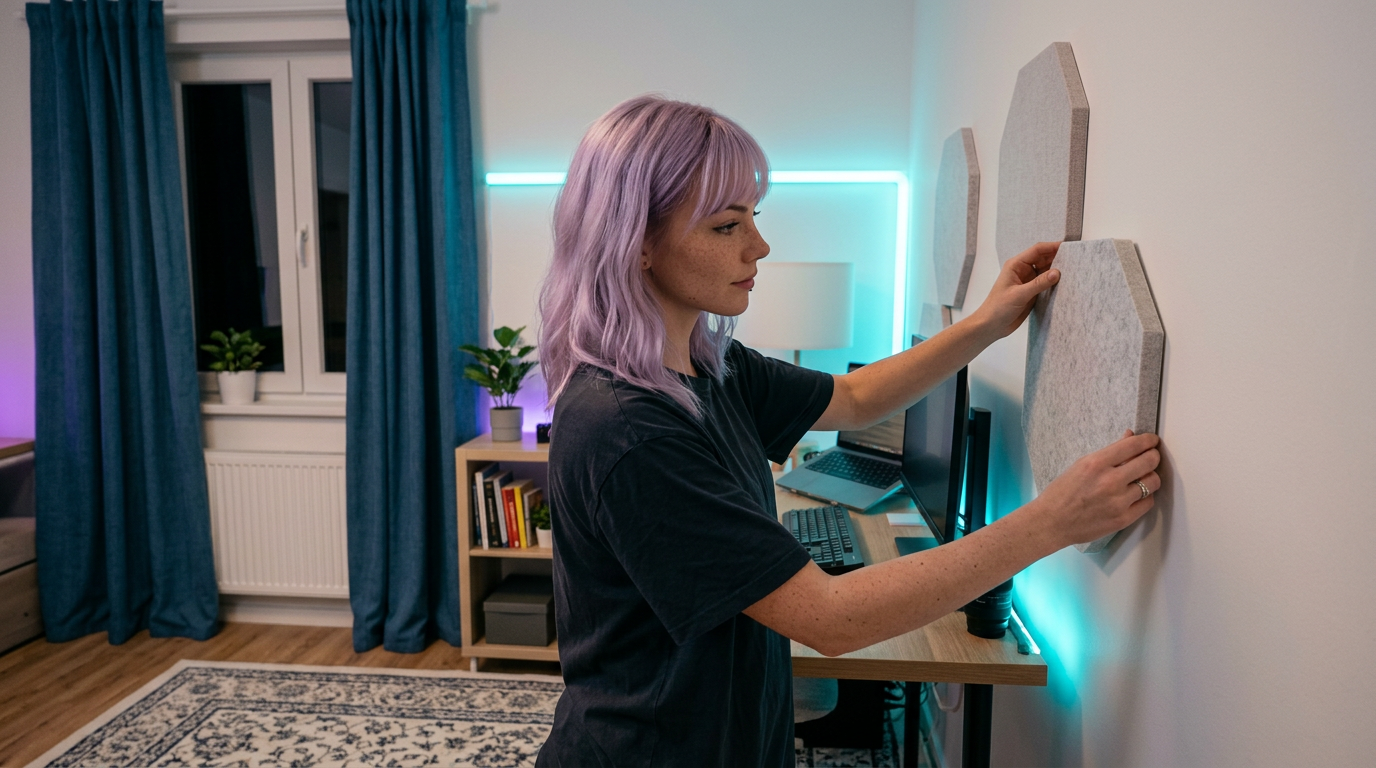
Most people do not need to turn the room into a foam cave.
- Start with the obvious reflections Rug, curtains, bookshelf, and soft furniture usually move the needle faster than covering every wall in cheap foam.
- Fix placement first A dynamic mic close to your mouth does more for speech clarity than random panels placed all over the room.
- Treat the desk zone The floor, side reflections, and the surface right under the mic often matter more than the far wall.
- Test before you buy more Clap, record, adjust, then decide. Random foam without testing is how people spend money and stay frustrated.
If you want the full desk-and-room breakdown, use Podcast Setup for a Small Room. If you want the quick renter-safe version, open Apartment Soundproof Starter.
JBER Acoustic Foam Panels Amazon ↗Related Guides
- Podcast Setup for a Small Room: Creator Gear, Mic Placement, and Echo Control
Build a podcast setup for a small room with the right mic, placement, desk layout, and renter-safe echo control.
Related Resources
- Apartment Soundproof Starter
A quick-start checklist to tame echo and noise in apartments for calls, voice recordings, and small-room podcast setups.
Related Posts
- How to Fix an Echoey Room Without Losing Your Deposit
Bad room tone is usually a soft-surfaces problem, not a soundproofing problem. Use the 5-minute clap test, fix mic placement, and add renter-safe panels only where the room still rings.