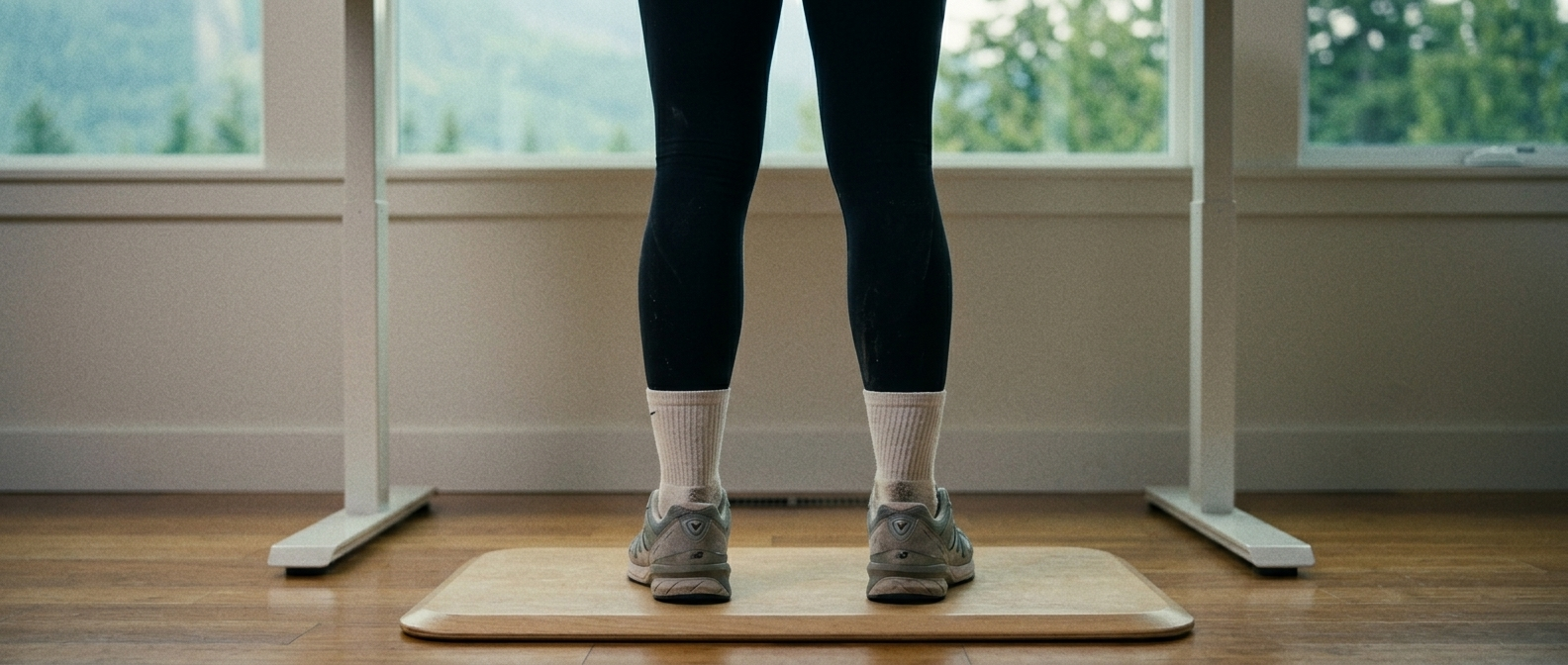
The best insole for standing all day is not the one that feels the softest in your hand. It is the one that still supports your arch, centers your heel, and keeps your forefoot from burning after hour six.
That is why this category gets confusing fast. Some insoles are basically plush placeholders. Others are so aggressive they feel like punishment. The right pick depends on what kind of support problem you are actually trying to solve.
As an Amazon Associate I earn from qualifying purchases.
Quick Picks That Cover Most People#

Dr. Scholl's Work All-Day Superior Comfort Insoles
Mass-market gel work insoles for hard floors and long shifts. Easy budget pick, but softer and less structured than heavy-duty orthotic-style options.
- Best for: easiest cheap upgrade when your shoes feel flat and fatiguing
- Why it works: soft work-oriented cushioning reduces soreness fast
- Tradeoff: lighter on true arch control

WalkHero Heavy Duty High Arch Support Insoles
Firm 220lb+ high-arch orthotic insoles for standing all day in work shoes and boots. Strong support lane for heavier bodies and flatter factory footbeds.
- Best for: stronger support in work boots and heavier standing days
- Why it works: firm arch structure without feeling brutally hard
- Tradeoff: less ideal if your shoes run wide

NEUPU Heavy Duty High Arch Support Insoles
Heavy-duty 240lb+ orthotic insoles with a strong arch profile and work-boot-friendly fit. Useful when you want firmer support than mass-market gel options.
- Best for: buyers who want support-first structure that still feels wearable
- Why it works: high-arch support with more comfort than some harsher orthotic inserts
- Tradeoff: still more assertive than a soft comfort lane

Fit Geno Heavy Duty Arch Support Insoles
Newer high-rated 220lb+ orthotic insole with aggressive arch support and Poron-style cushioning. Strong candidate for work boots and long hard-floor sessions.
- Best for: plantar-fasciitis-style pain without going fully clinical-feeling
- Why it works: strong support plus softer underfoot feel and good value signal
- Tradeoff: occasional squeak complaints

EASYFEET Premium Anti-Fatigue High Arch Support Insoles
Anti-fatigue arch-support insoles aimed squarely at standing all day. Good middle lane between soft gel comfort and harder heavy-duty orthotics.
- Best for: buyers who know they want pronounced arch support
- Why it works: strong structure, strong heel fixation, real all-day intent
- Tradeoff: can feel too aggressive if you want a gentler insert
Which Insole Fits Which Buyer#
Choose the Dr. Scholl’s lane if your main issue is simple fatigue. Your shoes feel flat, your feet feel beat up, and you want a fast improvement without turning the insole decision into a biomechanics project.
Choose WalkHero or NEUPU if you already know you need more structure. These are the better lanes for work boots, harder surfaces, and buyers who have already learned that soft gel alone is not enough.
Choose Fit Geno if you want stronger support but still care a lot about day-one comfort. It reads like one of the better middle-ground products in the category.
Choose EASYFEET if you want the most assertive support profile in this group and do not mind that it feels more pronounced under the arch.
Match the Insole to Your Foot and Floor#
Best Insoles for Flat Feet#
The arch never engages, so heel and forefoot take everything. You need structure that does the arch’s job for it: WalkHero or NEUPU are the support-first lanes here. Soft cushioning alone makes flat-foot fatigue worse, not better, because there is nothing holding the midfoot up.
Best Insoles for High Arches#
The load concentrates on heel and ball with a gap in between. EASYFEET or NEUPU fill that gap with a pronounced arch profile. The test: after an hour, pressure should feel spread across the whole footprint, not parked at both ends.
Standing on Concrete All Day#
Concrete has zero give, so shock absorption matters as much as structure. Fit Geno’s softer underfoot feel over a firm core is the right compromise, and this is the one surface where pairing with an anti-fatigue mat is close to mandatory.
Insoles for a Standing Desk at Home#
You control the floor and the shoes, so you need less correction than a warehouse shift does. The Dr. Scholl’s lane is usually enough, and a mat handles the rest — see Standing Desk Mat vs Insoles for how the two split the job.
Insoles for Walking All Day#
If your day mixes standing with miles of walking, prioritize forefoot cushioning that does not bottom out mid-shift — Fit Geno or Dr. Scholl’s over the firmer orthotic lanes. Walking loads and unloads the arch naturally, so you can trade some structure for comfort.
Insoles for Work Boots#
Work boots already bring stiffness, so the insole’s job shifts from adding cushion to holding support. If your standing-all-day problem is boot-based, the firmer lanes — WalkHero or NEUPU — carry more of the load than a soft insert can, and you usually pull the flat factory footbed first. The boot-specific shortlist lives in best insoles for work boots.
Heel Pain After Long Shifts#
Heel pain from static standing usually traces back to a shallow heel cup letting the pad spread out under load. Prioritize deep heel fixation — Fit Geno or NEUPU — over raw cushioning. If the pain is sharpest on the first step in the morning, that is plantar-fasciitis territory, and support beats squish every time.
What Matters More Than the Brand Name#
- Arch support that holds shape under static body weight
- Heel cup depth that keeps the foot centered
- Forefoot cushioning that does not bottom out
- Shoe compatibility, especially in work boots and tighter sneakers
The wrong insole problem is usually not that the product is terrible. It is that the product solves a different foot problem than the one you actually have.