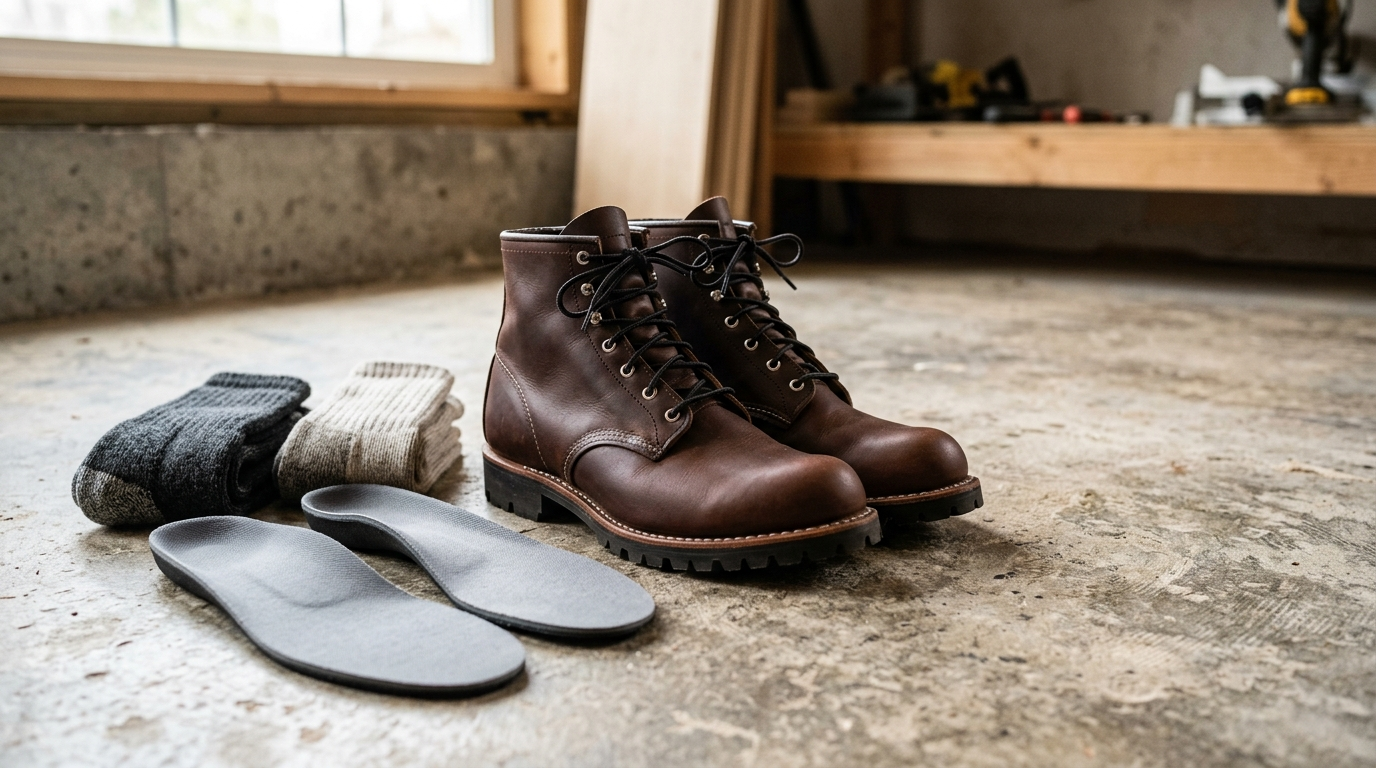
Concrete is the floor that exposes fake comfort fastest.
If an insole only feels good because it is soft, concrete will flatten that story by the end of the week. What survives here is structure, heel control, and cushioning that does not disappear under sustained pressure.
As an Amazon Associate I earn from qualifying purchases.
Quick Picks#

Fit Geno Heavy Duty Arch Support Insoles
Newer high-rated 220lb+ orthotic insole with aggressive arch support and Poron-style cushioning. Strong candidate for work boots and long hard-floor sessions.
- Best for: concrete-floor buyers who want real support without the harshest feel
- Why it works: support-forward but still wearable enough for long days
- Tradeoff: some squeak risk

EASYFEET Premium Anti-Fatigue High Arch Support Insoles
Anti-fatigue arch-support insoles aimed squarely at standing all day. Good middle lane between soft gel comfort and harder heavy-duty orthotics.
- Best for: aggressive arch support on hard floors
- Why it works: stronger structure and heel fixation
- Tradeoff: too much arch for some feet

WalkHero Heavy Duty High Arch Support Insoles
Firm 220lb+ high-arch orthotic insoles for standing all day in work shoes and boots. Strong support lane for heavier bodies and flatter factory footbeds.
- Best for: firmer work-boot support when heel fatigue and arch collapse are both in play
- Why it works: stable support and good hard-use signal
- Tradeoff: not the friendliest width fit

Dr. Scholl's Work All-Day Superior Comfort Insoles
Mass-market gel work insoles for hard floors and long shifts. Easy budget pick, but softer and less structured than heavy-duty orthotic-style options.
- Best for: softer first upgrade when stock insoles are clearly the problem
- Why it works: cheap, easy, fast comfort gain
- Tradeoff: lower long-term support ceiling on truly punishing floors
Concrete Changes the Rules#
Hard floors punish the heel first, then the arch, then the lower leg. That is why support shape matters so much more here than it does in casual walking.
If your feet hurt on concrete, the answer is rarely “add more gel.” It is usually “add more structure, then soften the floor too.”
That is why many people do best with both:
- insole inside the shoe
- anti-fatigue mat under the shoe
Use Standing Desk Mat vs Insoles for the full breakdown.
When Insoles Alone Are Not Enough#
If you are already using a decent insole and your heels still feel bruised by late afternoon, the floor is probably winning.
Concrete is unforgiving enough that there is a limit to what shoe inserts can do alone. That is especially true if you:
- stand mostly in one spot
- wear older shoes with tired midsoles
- work long shifts on warehouse, garage, or shop floors
At that point, the better move is usually not chasing softer inserts forever. It is combining a stable insole with a mat, better shoes, or both.
Who Should Choose the Softer Lane#
Dr. Scholl’s still deserves a place here because not every concrete-floor buyer needs maximum correction. If your shoes are simply dead inside and your arches are not the main issue, a softer upgrade can still move the needle.
The heavier-duty picks rise when the problem is bigger than that: heel soreness, arch fatigue, or long hard-floor sessions that chew through generic comfort inserts.