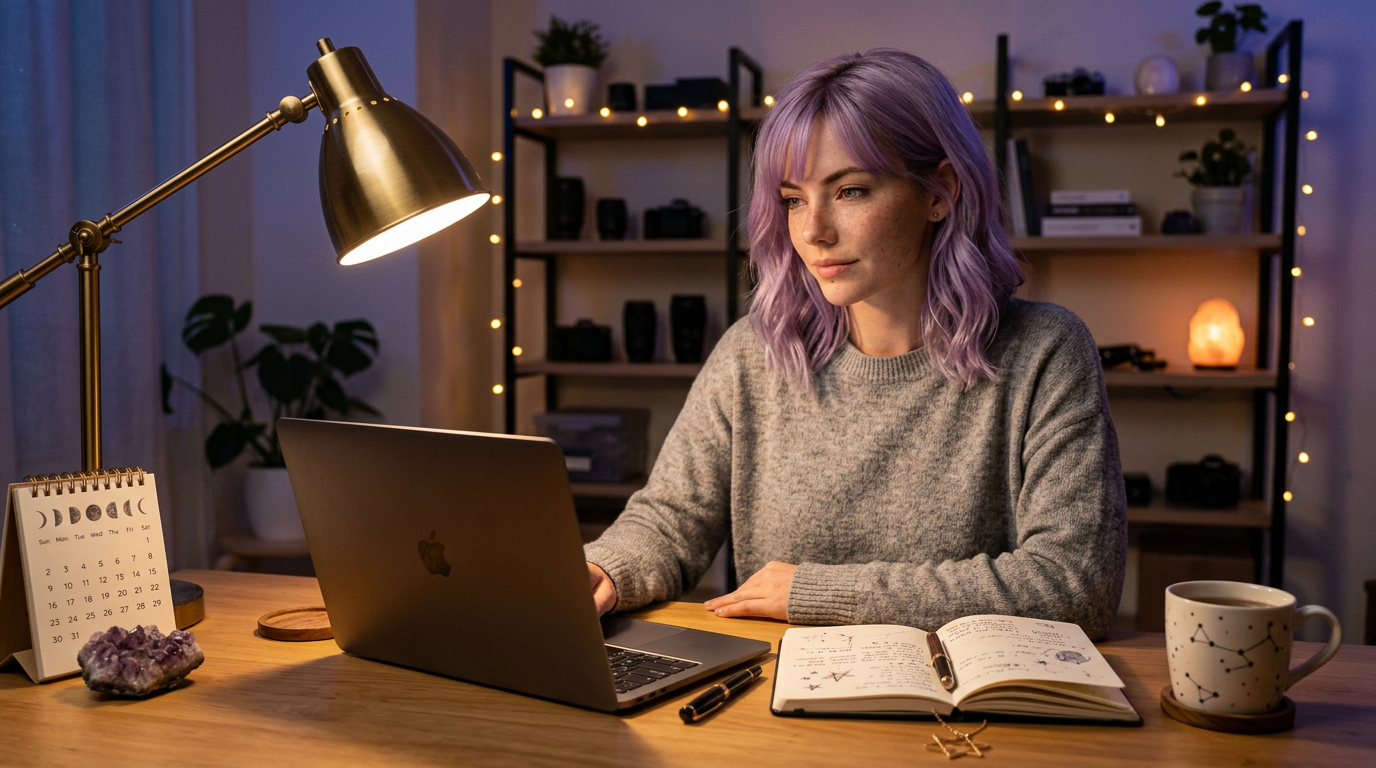
Late-night work either feels cinematic or chaotic. The difference is usually small: one light that is too bright, one cable path that keeps snagging, or one audio setting that makes everything feel sharp.
This version of “Love in the Cosmos” is about building a desk that keeps your nervous system steady while you ship.
Why this matters#
If your evening setup is harsh, you burn energy faster and context-switch more. A calm workstation helps you:
- stay in deep work longer,
- reduce friction between tasks,
- finish strong without turning every night into recovery mode.
Practical setup guidance#
1) Soften your light first#
Use one dimmable key light at low intensity and keep it off-axis. Add a warm background lamp so contrast is lower and your eyes are not constantly re-adjusting.
2) Reduce visual noise on the surface#
Keep only the active tools on the desk: keyboard, mouse, one notebook, one drink. Move everything else to a side shelf or drawer.
3) Clean one cable spine#
Route power and data in separate runs and leave one service loop near the back edge so swapping gear does not force a full rewire.
4) Use an audio boundary#
Pick one focus mode per block: either light background audio or silence. Don’t keep jumping between podcasts, playlists, and notifications.
Gear recommendations (for most people)#
- A dimmable desk or key light with warm temperature control.
- A cable tray + sleeve kit to keep a single clean route.
- A low-profile keyboard and comfortable mouse setup for long sessions.
Common mistakes and quick fixes#
Mistake: light aimed directly at your face#
Fix: move it 30–45 degrees off-axis and lower brightness.
Mistake: cable bundle hanging at sit/stand transition#
Fix: add a service loop and clip strain points under the back edge.
Mistake: “infinite tab” workflow#
Fix: define one active task and one parked task per block.