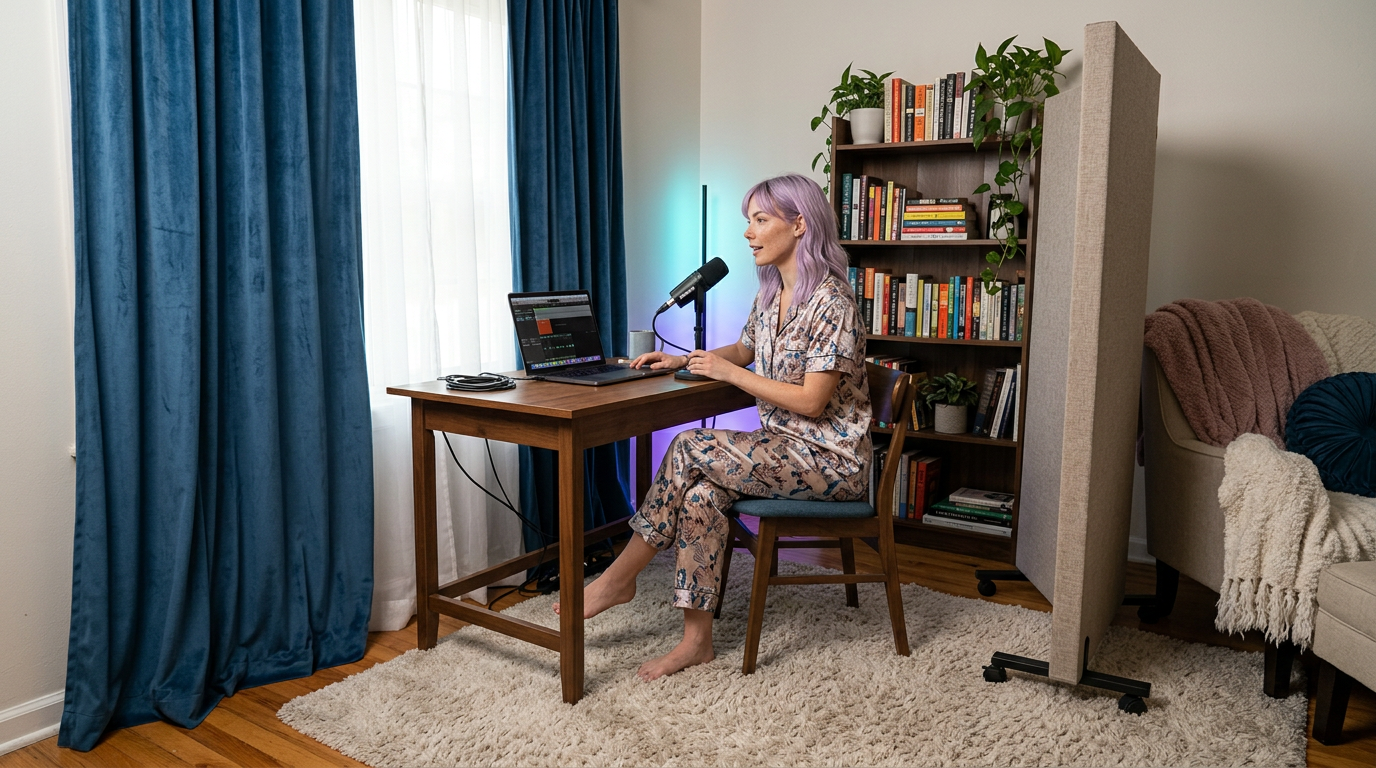
An echoey room is almost always a soft-surfaces problem. Hard floors, bare walls, and uncovered windows reflect sound back and forth until it builds up — that is the flutter echo you hear on calls and recordings. You do not need permanent treatment or a foam cave to fix it. You need smarter surfaces, better mic placement, and a few reversible changes that will not cost you the security deposit.
For a fuller desk-to-mic walkthrough, see Podcast Setup for a Small Room. This page is the renter-safe troubleshooting pass for when the mic is already chosen and the room still sounds too live.
Fast fixes for an echoey apartment that don’t wreck the lease#
- Soft stuff first: rug, curtains, couch throw, and a bookshelf with uneven spines beat cheap foam tiles.
- Move the mic: closer to mouth, off-axis to kill plosives, away from walls/monitors that reflect.
- Temporary panels: freestanding or adhesive-free panels behind the monitor or to the sides during calls.
If you want a one-minute checklist before a recording session, keep Apartment Soundproof Starter nearby.
Gear picks for renters#
As an Amazon Associate I earn from qualifying purchases.
For most echoey rooms, the first product purchase that moves the needle is acoustic foam panels placed behind and beside the mic position. You do not need to cover every wall — treating the first-reflection points is enough for calls and voice recordings.
JBER Acoustic Foam Panels Amazon ↗ are the budget-friendly starting point: wedge-cut foam that cuts flutter echo in small reflective rooms. Mount with Command strips for a renter-safe install that peels clean. A 12-pack covers the wall area directly behind the mic and one side panel.
Beyond acoustic panels:
- Clamp-on mic baffles: attach to a desk or monitor arm; fold away after calls.
- Heavier curtains or a portable divider: cover the wall facing the mic; double as light control with no drilling required.
5-minute clap test for renter-safe echo control#
Step 1: Clap from your chair; listen for sharp flutter.
Step 2: Place a pillow/blanket on the desk edge; clap again.
Step 3: If better, add soft under the mic line (mat, pad) and one side absorber (curtain/panel).
Step 4: Do a 30-second mic test and listen for room tone; adjust mic angle/distance.
Step 5: Save the setup: note mic position and what soft stuff helped.
Wrap-up#
Small rooms can sound warm without permanent treatment. Share your renter-safe echo fixes—I’d love to add the best ones to this list.
If the next problem is the microphone itself, read Best Mic for a Noisy Apartment?.