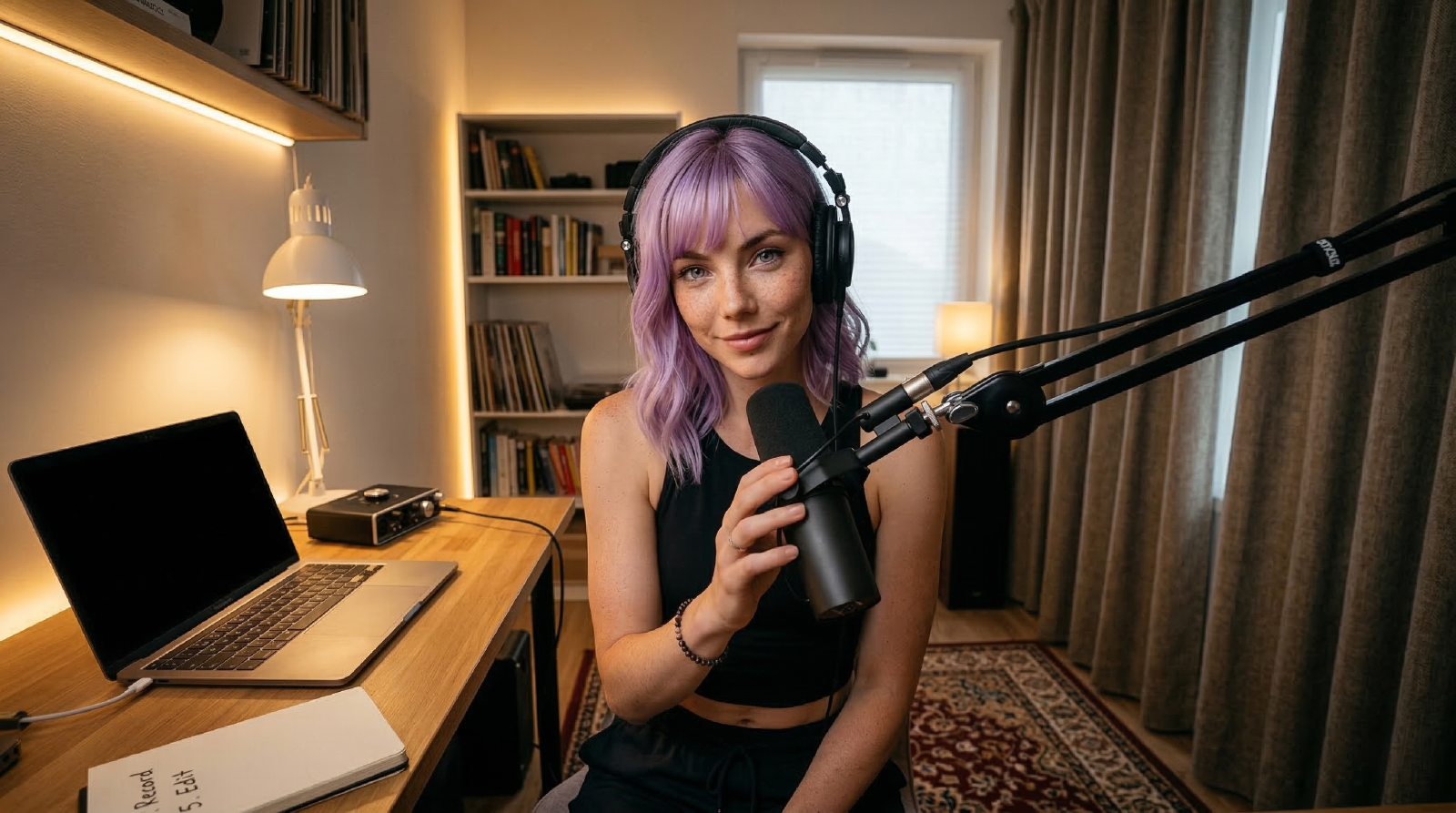
If you are building a podcast setup in a small room, the room is part of the signal chain whether you want it to be or not.
That matters because the same hard walls and short listening distance that make a small room convenient also make it easier for your mic to hear desk reflections, flutter echo, HVAC, and laptop fan noise. The goal is not to build a studio. The goal is to make your voice the most obvious thing in the recording.
Use this page as the main build plan for the cluster. The supporting pages go narrower: Room-Tone Rescue for Echoey Apartments handles echo troubleshooting, Best Mic for a Noisy Apartment? answers the fastest buying question, Best Microphones for Noisy Home Offices (2026) is the commercial shortlist, and Apartment Soundproof Starter is the quick checklist.
For most creators, the win comes from four moves in the right order:
- Choose a spoken-word-friendly mic.
- Place it closer than feels “normal” at first.
- Reduce the hardest reflections around the desk.
- Lock a setup that is easy to repeat.
Start With the Small-Room Podcast Setup That Actually Works#
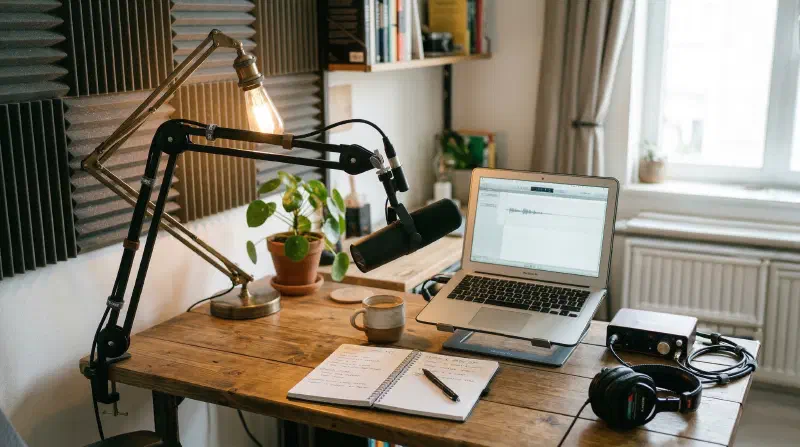
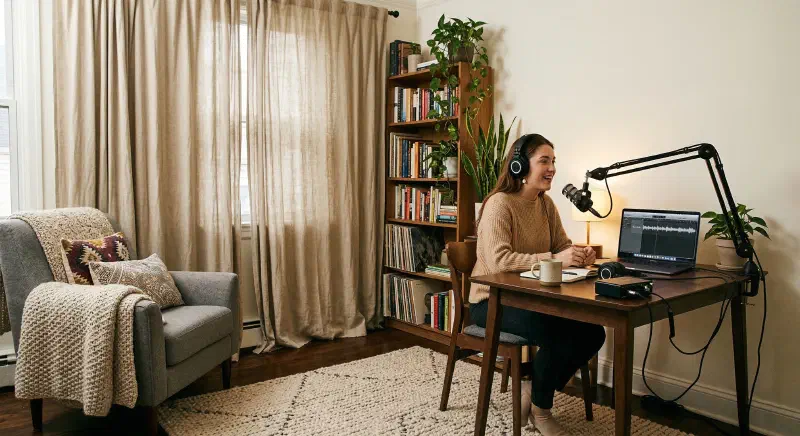
Small-room podcasting usually fails when people picture a full studio and ignore how they actually record. Most of the time the real setup is a desk, a monitor, a mic arm, and whatever surfaces happen to be nearby.
That is why a desk-first setup beats a fantasy studio plan. If the mic position, chair, desk depth, and background surfaces work together, the room gets easier to manage without much extra gear.
If you are still deciding on the microphone itself, start with Best Microphones for Noisy Home Offices (2026). If you already know the room is the bigger problem, keep going here. If you just need the shortest renter-safe checklist, open Apartment Soundproof Starter in a second tab and use this guide as the full buildout.
Build the Core Gear Stack First#
You do not need a long shopping list. You need the few pieces that keep your voice forward and the room behind it.
Affiliate note: some links in this section are paid links, and I may earn a commission if you buy through them.
1. A dynamic mic that likes close speech#
For small untreated rooms, the safe default is a dynamic mic with a spoken-word workflow.
- Shure MV7+ Amazon ↗ : safest all-around choice if you want a polished hybrid call-and-content setup.
- Audio-Technica ATR2100x-USB Amazon ↗ : easier budget entry point that still rewards close placement.
- Rode PodMic USB Amazon ↗ : strong speech-first option if you are willing to position it properly.
The reason these work is not magic branding. It is that they let you get closer, lower the gain, and stop the room from dominating the track.
2. A boom arm, not a desk stand#
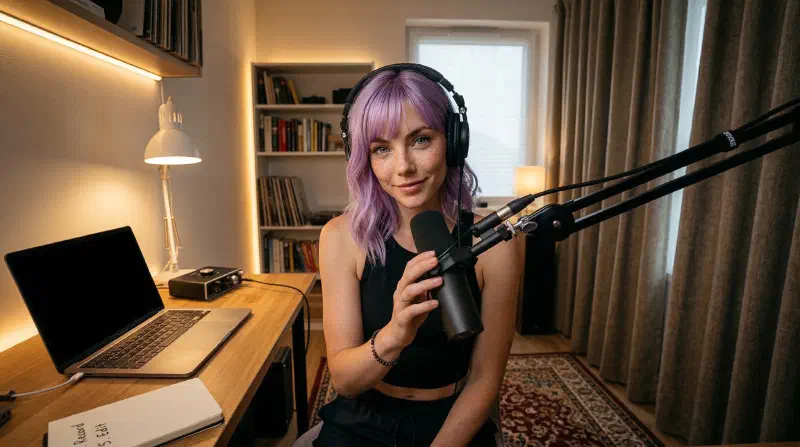
In a small room, desk real estate disappears fast. A boom arm matters because it solves two problems at once:
- gets the mic close without blocking your keyboard
- keeps placement repeatable from one session to the next
If you want the simplest budget pick, use this basic boom arm Amazon ↗ and clamp it once so your mic position stays consistent.
That is why the Best Mic for a Noisy Apartment? answer always pushes the arm and placement part, not just the capsule.
3. One or two renter-safe softening moves#
The best first room fixes are usually boring:
- thick rug under the desk
- curtains if there is a hard window nearby
- bookshelf or irregular surface behind you
- soft layer on the desk edge if the desk is very reflective
If you want the shorter version of these apartment-friendly fixes, read Apartment Soundproof Starter alongside this guide.
If you are still narrowing the shopping list, jump to Best Microphones for Noisy Home Offices (2026). If you already know the room is workable and just need a straight answer, Best Mic for a Noisy Apartment? is the shortest path.
Get Mic Placement Right Before You Buy More Gear#
Mic placement is the cheapest “gear upgrade” most people will ever get.
Start here:
- 4 to 6 inches from your mouth
- slightly off-axis, aimed toward the corner of your mouth
- above or beside the keyboard rather than behind it
- lowered gain after you move the mic closer
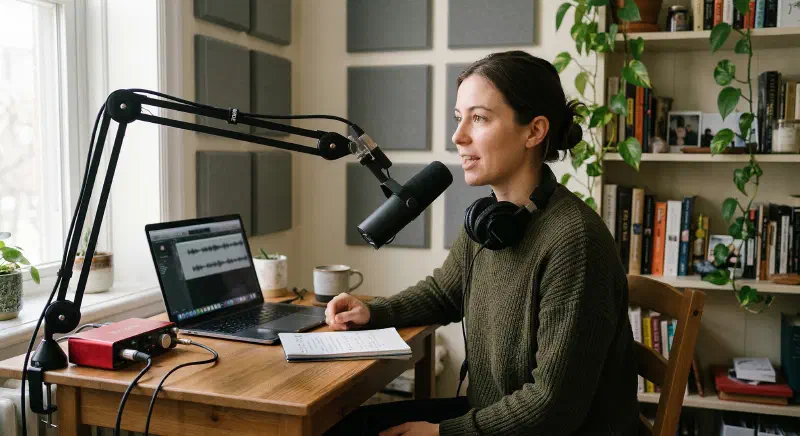
The biggest mistake is placing the mic too far away because it looks cleaner on camera. That is exactly how the room sneaks back into the recording.
If you are choosing between cleaner framing and cleaner audio, choose cleaner audio first. Then work the camera around it.
Control Echo Without Turning the Room Into a Foam Cave#
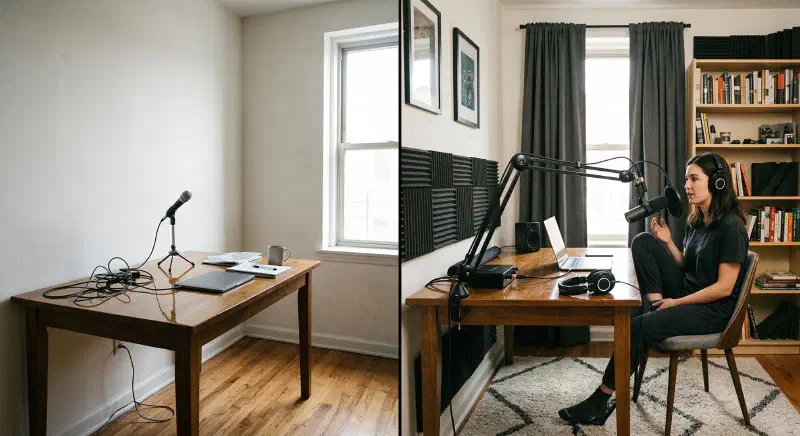
You do not need foam on every wall. You need to break up the reflections that are closest to the mic path.
Start with the three easiest fixes#
- Floor: Add a rug if the floor is hard.
- Sides: Soften one or both reflective side zones near the desk.
- Behind you: Give the room something irregular or soft to bounce into.
Then test instead of guessing#
Do a 10-second clap test before and after each change. If the tail shortens, the move mattered. If it does not, stop buying random panels and change position instead.
For a renter-safe echo workflow, Room-Tone Rescue for Echoey Apartments is the supporting article that goes deeper on what to change first.
Keep the Signal Chain Simple#
For most solo creators in small rooms, this is enough:
- dynamic mic
- boom arm
- headphones
- quiet room settings
- one saved input preset in your recording app
If you are recording for video, podcasts, and calls from the same desk, consistency matters more than complexity. One repeatable setup usually beats a bigger setup you keep moving around.
For app-side cleanup after the physical setup is fixed, use the Zoom Audio Settings Cheat Sheet and keep the software layer simple.
Spend in the Right Order#
If you want a “good enough to publish” setup in a small room, the budget should usually go in this order:
- microphone
- boom arm
- headphones
- rug / curtain / softening move
- optional interface upgrade
That order matters because creators often overspend on interfaces before fixing the room and the placement. Better position usually beats more gear.
Common Small-Room Podcast Setup Mistakes#
- Buying a condenser because it looked premium in someone else’s studio.
- Putting the mic too far away so the desk and walls become part of the recording.
- Treating foam panels like a shortcut instead of testing the actual reflection problem.
- Leaving the desk bare and reflective right under the mic path.
- Changing the setup every session and then wondering why the sound is inconsistent.
Choose Your Next Step#
If your main problem is room sound, go next to Room-Tone Rescue for Echoey Apartments.
If your main problem is which mic to buy, go next to Best Microphones for Noisy Home Offices (2026).
If your main problem is tight budget plus noisy apartment, go next to Best Mic for a Noisy Apartment?.
If your main problem is a quick setup checklist, use Apartment Soundproof Starter.
Bottom Line#
The best podcast setup for a small room is not the prettiest one. It is the one that keeps your voice close, the room controlled, and the workflow repeatable.
Once those three things are true, a small room stops feeling like the limitation and starts feeling like the system.
Related Guides
- Zoom Audio Settings Cheat Sheet
Set Zoom audio once and forget it for meetings and webinars.
Related Reviews
- Shure MV7+
A premium USB-C/XLR dynamic microphone that earns its keep when you want polished spoken-word audio without overcomplicating the desk.
- Rode PodMic USB
A speech-first USB/XLR dynamic microphone that rewards close placement and a stable desk setup with a more broadcast-leaning voice tone.
Related Resources
- Apartment Soundproof Starter
A quick-start checklist to tame echo and noise in apartments for calls, voice recordings, and small-room podcast setups.
Related Comparisons
- Best Microphones for Noisy Home Offices (2026)
A practical microphone shortlist for noisy rooms, focused on voice clarity and repeatable setup for calls and content sessions.
Related Posts
- Room-Tone Rescue for Echoey Apartments
Budget-friendly ways to tame echo for calls and recordings in small, hard-walled rooms—no drilling, no studio foam walls.